
Unearthed photo shows Selby's familiar Toll Bridge under construction
As Selby patiently waits for its summer of disruption on the towns busy rail river crossing to reach a conclusion, Selby Online shines a spotlight on a much bigger engineering undertaking from the past.
Selby
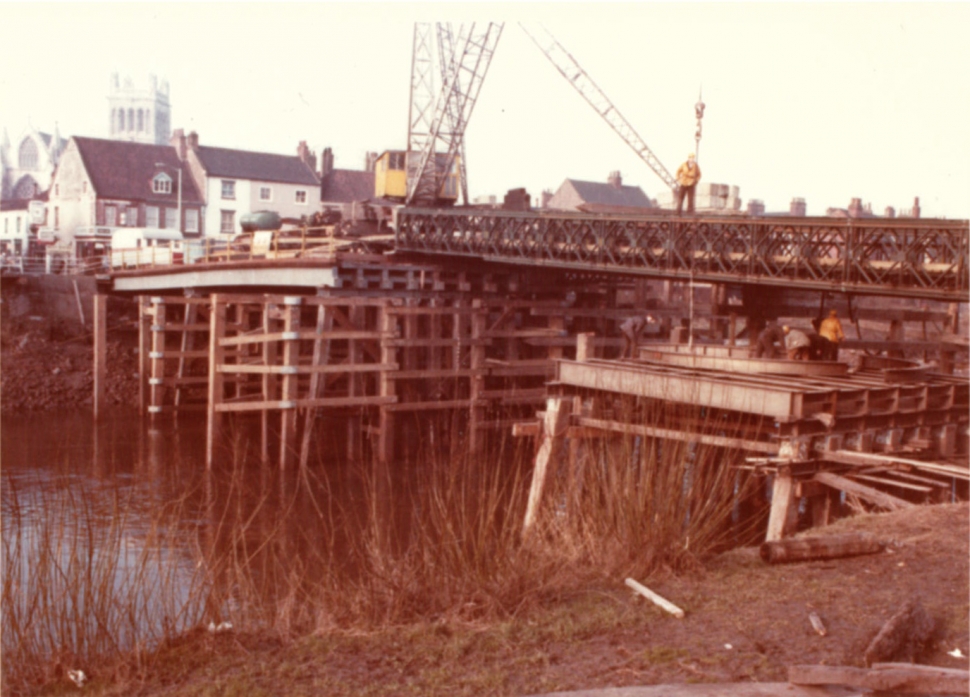
Crossing the river using the former Selby Toll Bridge is a task that has been taken for granted by most Selebians for more than 200 years. When parliament passed the 1791 Selby Bridge Act it brought an end to traditions of ferry boats crossing the river, then border between the historic West and East Ridings of Yorkshire.
But in 1966 a structural survey of the original oak structure cast doubts over the bridge's future. Repair and maintenance was no longer considered economically viable to the toll company and the old bridge would need to be demolished and rebuilt. At the time of the old bridge's demolition it was the last timber trestle bridge carrying trunk road traffic (then the A63) in the country.
The bridge we cross today was constructed around the old one during an 18-month period between 1968 and 1970. Construction of the new bridge cost £130,000 and with it brought the benefits of a modern electrical swinging system to replace the mechanical gears used to turn the old bridge.
Building of the modern day bridge was planned in two halves to allow river crossings to continue unimpeded over a temporary timber gantry and modular 'Bailey bridge' whilst steelwork was assembled underneath.
This wasn't to be however as the semi-built bridge was struck by a passing ship on August 7th, 1968 forcing it's closure to traffic. Over the next three weeks traffic anyone wishing to cross the via road could only do so by making a detour of some 30 miles.
Our photograph, published for the first time by Selby Online, shows the temporary 'Bailey Bridge' in place on the Barlby side of the river as workers below move the chain mount of the new electric-driven swing mechanism into place. Already in place on the Selby bank is the first section of the modern-day bridge painted pale blue with yellow railings – exactly as it remained until it was repainted following the abolition of tolls in the 1990s.
The new bridge was eventually completed and opened in 1970.